
Competencies
- AN76.1: Describe the stages of human life.
- AN76.2: Explain the terms–phylogeny, ontogeny, trimester, viability.
Introduction
- Embryology introduces the fundamental principles of human development, tracing the transformation of a fertilized ovum into a complex, organized human body. It provides the foundation for understanding developmental milestones, tissue and organ formation, congenital anomalies, and their clinical significance.
Basic Terminology
Embryology
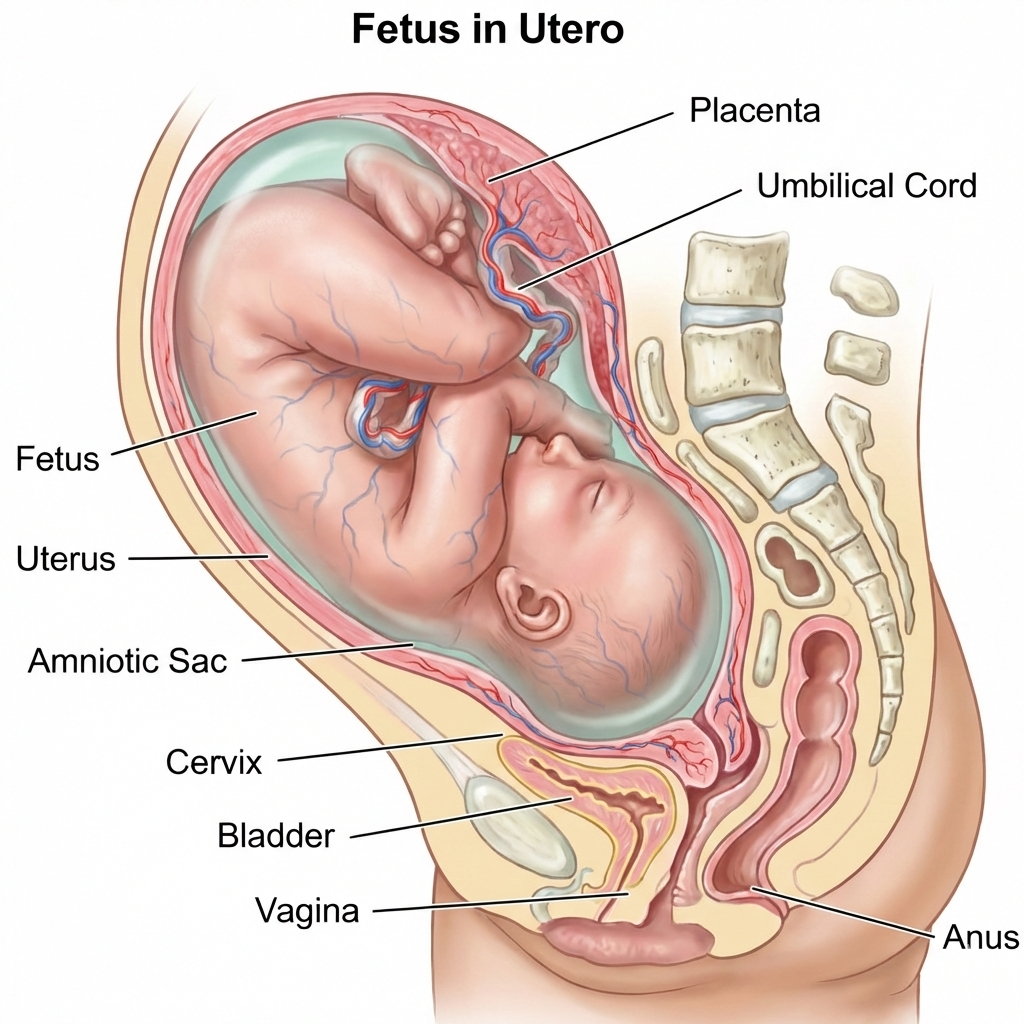
- Embryology is the scientific study of the processes involved in the formation and early development of a human being from fertilization until birth (Figure 1.1).
- It focuses on cellular differentiation, tissue formation, organogenesis, and growth during the prenatal period.
Reproduction
- Sexual reproduction is a biological process in which male and female gametes unite to form a zygote.
- The zygote develops into a new individual. This process ensures continuity of the species and introduces genetic variation.
Reproductive Biology
- Reproductive biology is the scientific study of the mechanisms involved in reproduction.
- It includes the structure and function of male and female reproductive systems. It also covers hormonal regulation, gametogenesis, fertilization, implantation, pregnancy, and fertility.
- The subject integrates anatomy, physiology, endocrinology, and molecular biology related to reproduction.
Developmental Anatomy
- Developmental anatomy is the study of structural changes in the human body from fertilization through adulthood.
- It includes prenatal development, postnatal growth, and maturation of organs and systems. The subject explains how normal anatomical structures are formed and how variations or congenital anomalies may arise.
Ontogeny
- Ontogeny refers to the complete sequence of developmental events in an individual organism.
- It includes both prenatal development and postnatal growth, maturation, and aging. Ontogeny describes the progression from a single fertilized cell to a fully developed adult organism.
Phylogeny
- Phylogeny is the study of the evolutionary history and relationships among organisms. Vertebrates are grouped into fishes, amphibians, reptiles, birds, and mammals based on evolutionary features.
- Mammals are classified into:
- Prototheria: egg-laying mammals
- Metatheria: marsupials with immature young developing in a pouch
- Eutheria: placental mammals; humans belong to this group
- Ernst Haeckel proposed that “ontogeny recapitulates phylogeny,” suggesting that embryonic development reflects evolutionary stages. An example is kidney development: pronephros, mesonephros, and metanephros appear sequentially during human development.
Development
- Human development begins from a single cell, the zygote, and proceeds through growth and differentiation. Human development begins from a single cell, the zygote, and proceeds through growth and differentiation.
- Development refers to the transformation of a single cell into a complex multicellular organism with specialized tissues and organs.Development refers to the transformation of a single cell into a complex multicellular organism with specialized tissues and organs.
Growth
- Growth is an increase in cell number and/or cell size.
- Types of growth:
- Multiplicative growth: Increase in cell number by mitotic division.
- Auxetic growth: Increase in cell size.
- Accretionary growth: Contribution of reserve or stem cells after embryonic life.
Differentiation
- Differentiation is the process by which cells acquire specific structural and functional characteristics.
- Early embryonic cells include:
- Totipotent cells: Zygote and morula cells; can form all embryonic and extraembryonic tissues.
- Pluripotent cells: Inner cell mass; can form all body tissues except placenta.
- Multipotent cells: Adult stem cells; can produce limited related cell types.
- Differentiation includes chemiodifferentiation, histodifferentiation, organogenesis, and functional differentiation.
Trimesters of Pregnancy
- Pregnancy lasts about 40 weeks when calculated from the first day of the last menstrual period. A normal duration ranges from 37 to 42 completed weeks. For clinical purposes, it is divided into three trimesters.
First trimester
- The first trimester extends from conception dating by last menstrual period up to 13 completed weeks. Common symptoms include nausea, vomiting, fatigue, and breast tenderness. This is the period of organogenesis. Therefore, the embryo is highly sensitive to teratogenic agents, alcohol, certain drugs, and radiation. A large proportion of spontaneous abortions occur during this stage. Ultrasonography is used to confirm intrauterine pregnancy, determine gestational age, and assess the number and location of gestational sacs.
Second Trimester
- The second trimester extends from 14 to 26 weeks. Maternal symptoms may include back pain, leg cramps, and varicosities. Fetal movements are usually perceived around 18 to 20 weeks. A detailed anomaly scan is commonly performed between 18 and 22 weeks to assess fetal anatomy, growth parameters, amniotic fluid volume, placental position, and cardiac activity.
Third Trimester
- The third trimester begins at 27 weeks and continues until delivery. During this period, there is rapid fetal growth and maturation of organ systems in preparation for extrauterine life.
Basic Descriptive Terms in Embryology
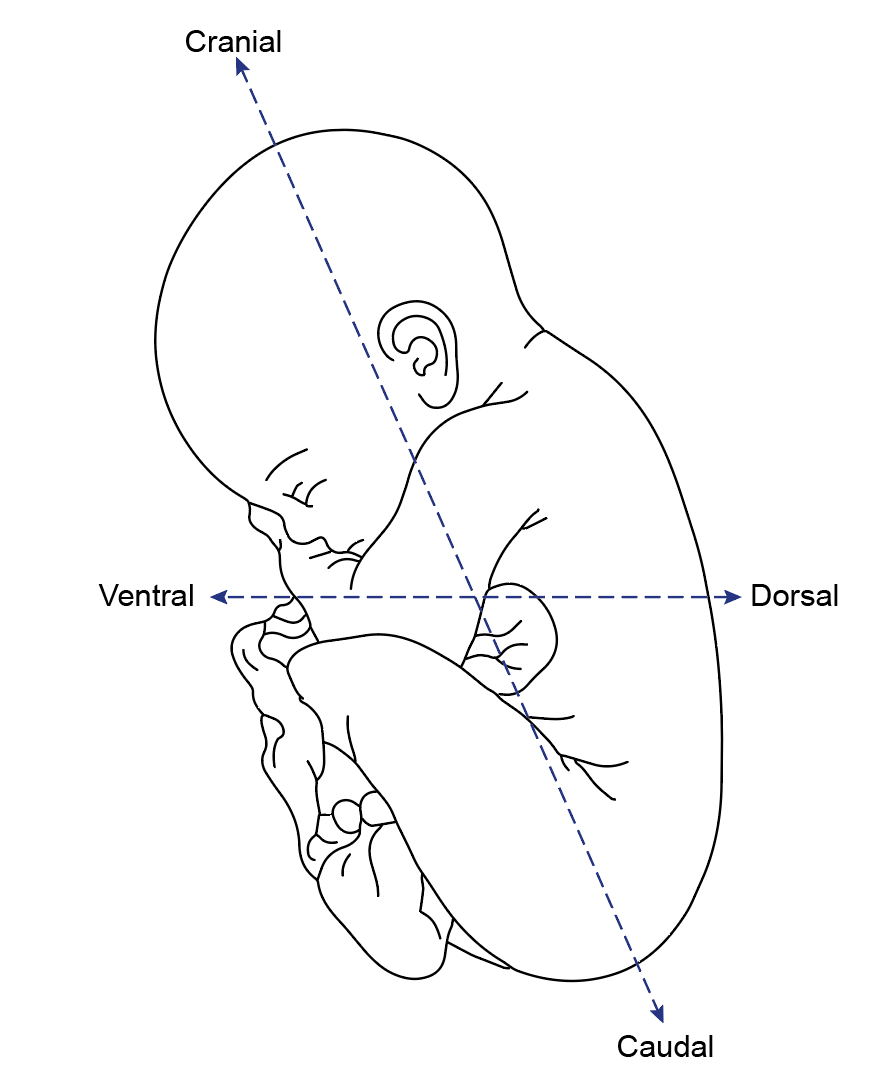
- Ventral refers to the surface of the body directed toward the anterior abdominal wall during early development (Figures 1.1 and 1.2).
- Dorsal indicates the surface directed toward the back.
- Cranial (rostral) describes a position closer to the head end of the embryo.
- Caudal refers to a position toward the tail end or future coccygeal region.
- Proximal denotes a location nearer to the point of origin of a structure or closer to the trunk.
- Distal indicates a position farther from the point of origin or away from the trunk.
- Invagination is the inward folding of a layer of cells into the interior of the embryo.
- Evagination is the outward projection of a structure from a surface.
- Differentiation is the process by which unspecialized cells acquire specific structural and functional characteristics.
- Gamete is a haploid reproductive cell, either a spermatozoon or an ovum, that participates in fertilization.
- Genotype refers to the complete genetic constitution of an individual.
- Phenotype describes the observable structural and functional features resulting from gene expression and environmental influence.
- Mesenchyme is an embryonic connective tissue derived mainly from mesoderm, composed of loosely arranged cells embedded in extracellular matrix.
- Teratogen is a physical, chemical, or biological agent that can disturb embryonic development and cause congenital anomalies.
- Agenesis is the complete absence of an organ due to failure of its primordial tissue to develop.
- Aplasia is incomplete development of an organ, resulting in a small, rudimentary structure.
- Hypoplasia is underdevelopment of an organ due to reduced cell proliferation.
- Atresia is the congenital absence or abnormal closure of a normal body opening or tubular structure.
- Atrophy is a reduction in the size of an organ after it has developed, caused by a decrease in cell size, number, or both.
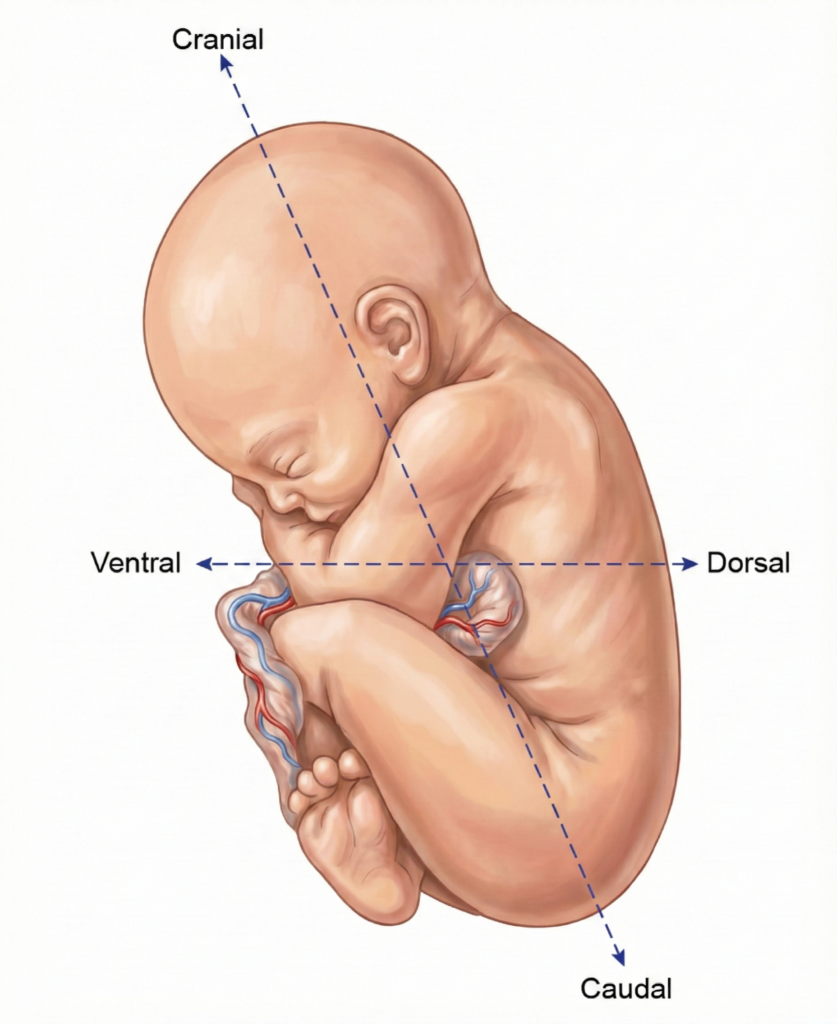
Figure 1.2a: Line diagram: Descriptive terms in embryology (Click to see figure)
Important Questions
- What is ontogeny?
- What is phylogeny?
- What is the difference between growth, development, and differentiation?
📝 Test Your Knowledge – Practice MCQs
Attempt the chapter MCQ quiz and assess your understanding of key concepts.
Click to see: Medical Disclaimer and Copyright Notice