
Competencies
- PY1.1 Describe the structure and functions of a mammalian cell
Introduction
- The human body is organized into specialized organ systems that work both independently and in close coordination. This structural organization sustains nutrition and energy supply, enables movement and protection, regulates body functions, and supports reproduction for the continuity of life.
Nature Of Organization
Unicellular vs Multicellular Organisms
Unicellular Organisms
- In unicellular organisms, a single cell performs all vital life processes through direct interaction with the surrounding environment.
- Oxygen and dissolved nutrients enter the cell mainly by diffusion, while larger particles may be taken in by phagocytosis.
- Metabolic wastes, including carbon dioxide, diffuse out of the cell into the surrounding medium.
- Undigested materials are expelled by exocytosis.
- Cellular movement occurs through pseudopodia formed by contractile elements within the cell.
- Reproduction occurs by simple cell division, producing genetically similar daughter cells.
Multicellular Organisms
- In multicellular organisms, numerous specialized cells cooperate to perform complex functions.
- Similar cells form tissues, such as epithelial, muscular, nervous, and connective tissues.
- Different tissues combine to form organs, which perform specific physiological functions.
- Organs work together within organ systems to maintain body function and internal stability.
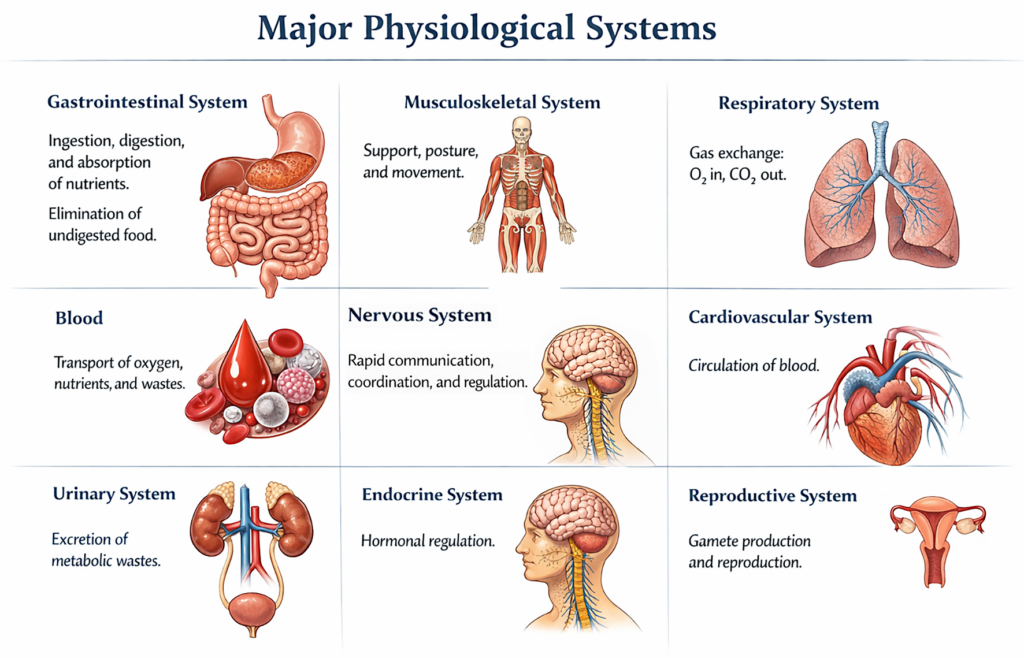
Major Physiological Systems
- The human body is organized into multiple organ systems that cooperate to maintain survival, activity, and internal stability. These systems perform specialized functions but operate in close coordination to sustain normal physiological processes.
- The major body systems are:
- Gastrointestinal system is responsible for ingestion, digestion, and absorption of nutrients, water, and electrolytes. It also eliminates undigested food residues.
- Musculoskeletal system, consisting of bones, joints, and skeletal muscles, supports the body, maintains posture against gravity, and enables voluntary movement and physical work.
- Respiratory system facilitates the exchange of gases. It supplies oxygen to the blood and removes carbon dioxide produced during cellular metabolism.
- Blood acts as a transport medium that carries oxygen, nutrients, hormones, and metabolic wastes between organs and tissues. It also contains immune cells that participate in body defence.
- Cardiovascular system, composed of the heart and blood vessels, pumps and circulates blood throughout the body to maintain adequate tissue perfusion.
- Urinary system, mainly consisting of the kidneys, ureters, urinary bladder, and urethra, excretes metabolic wastes such as urea, uric acid, and creatinine. It also regulates the composition of the extracellular fluid and maintains fluid and electrolyte balance.
- Endocrine system secretes hormones that regulate metabolism, growth, development, and reproductive functions.
- Nervous system provides rapid communication, coordination, and regulation of body activities.
- Reproductive system produces gametes and supports reproduction, ensuring the continuation of the species.
📝 Test Your Knowledge – Practice MCQs
Attempt the chapter MCQ quiz and assess your understanding of key concepts.
Click to see: Medical Disclaimer and Copyright Notice